
Condition
Plantar Fasciitis
Common Symptoms of Plantar Fasciitis
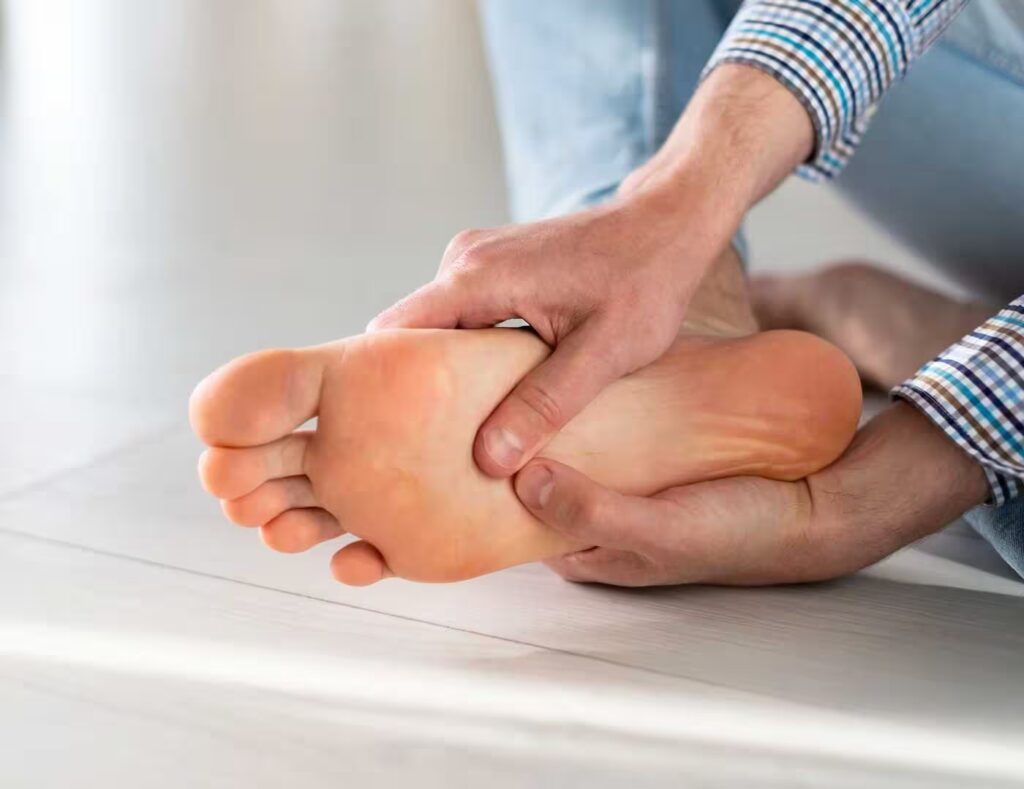
Plantar fasciitis is a common cause of heel pain, caused by irritation or inflammation of the plantar fascia — the thick band of tissue that runs along the bottom of the foot. It’s often linked to overuse, poor footwear, or changes in activity level. Typical symptoms include:
- Sharp heel pain – Often most intense with the first steps in the morning or after long periods of rest.
- Pain after activity – Discomfort tends to ease during exercise but returns afterwards.
- Tenderness on the bottom of the heel – Especially when pressing on the inside of the heel or arch.
- Stiffness in the foot – Particularly noticeable in the morning or after sitting for a long time.
- Tight calf muscles or Achilles tendon – Often associated with plantar fasciitis and can contribute to symptoms.
- Difficulty walking barefoot or on hard surfaces – Pain may worsen without supportive footwear.
How Physiotherapy Can Help
Physiotherapy is highly effective in treating plantar fasciitis by reducing pain, promoting healing, and addressing the underlying causes. A physiotherapist will assess your symptoms and movement to create a personalised treatment plan, which may include:
- Manual Therapy – Techniques such as soft tissue massage, myofascial release, and joint mobilisation to relieve pain and tension in the foot and calf.
- Shockwave Therapy - Promotes the body's natural healing process. Usually within 4 to 6 sessions (depending on how long you’ve had the issue) you’ll have a full recovery.
- Stretching Exercises – Targeted stretches for the plantar fascia, calf muscles, and Achilles tendon to improve flexibility and reduce strain on the foot.
- Strengthening Exercises – Exercises to build strength in the foot and lower leg muscles to improve support and function.
- Footwear Advice and Orthotics – Recommendations for supportive footwear or custom insoles to relieve pressure on the heel and arch.
- Taping or Padding Techniques – To offload the plantar fascia and reduce discomfort during daily activities.
- Activity Modification and Load Management – Advice on pacing and adapting activity levels to avoid aggravating the condition while staying active.
- Education and Prevention – Tips on managing symptoms, maintaining foot health, and preventing recurrence through posture, gait correction, and lifestyle changes.
With the right physiotherapy approach, most cases of plantar fasciitis improve significantly within a few weeks to months, helping you get back to pain-free movement and daily activities.