Condition
Disc Conditions
Common Symptoms of Disc Conditions
A “slipped disc” — more accurately called a herniated or prolapsed disc — occurs when one of the spinal discs bulges or ruptures, potentially irritating nearby nerves. This most commonly affects the lower back (lumbar spine), but can also occur in the neck (cervical spine).
- Localised back pain – A constant or intermittent ache in the lower back or neck, often worsened by sitting, bending, or lifting.
- Radiating pain – Pain that travels down the leg (sciatica) or into the arm, depending on the disc’s location and the nerves affected.
- Numbness or tingling – Sensations of pins and needles in the limbs, often following the path of a nerve.
- Muscle weakness – Difficulty lifting the foot (“foot drop”), gripping objects, or performing certain movements due to nerve compression.
- Pain aggravated by movement – Increased discomfort during coughing, sneezing, or certain positions.
- Reduced flexibility or stiffness – Difficulty bending, twisting, or getting up from a seated position.
How Physiotherapy Can Help
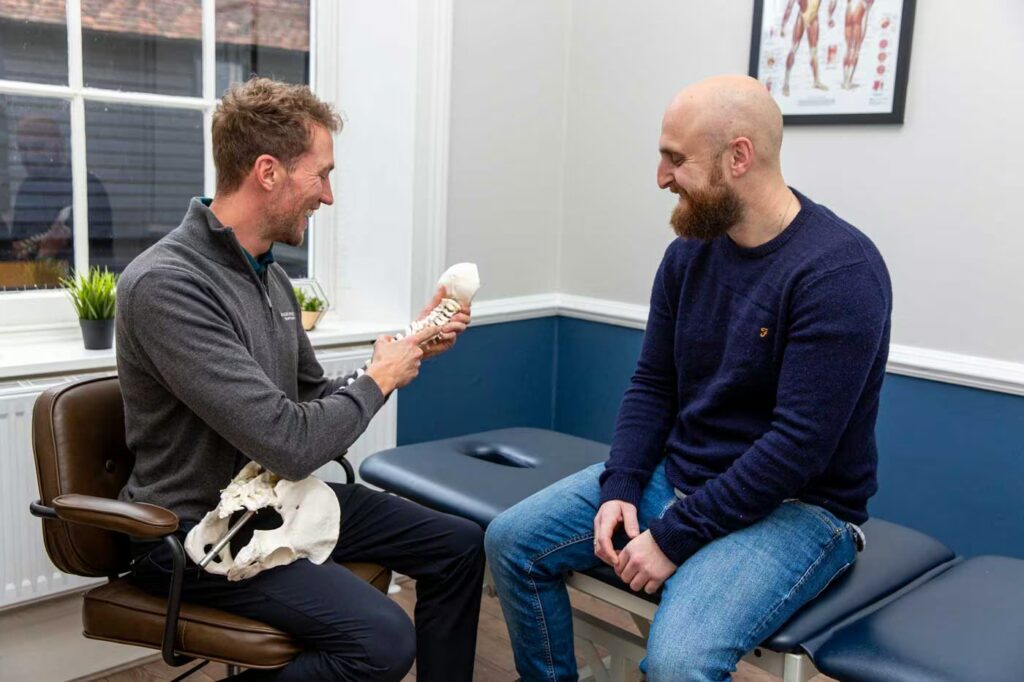
Physiotherapy plays a key role in managing disc-related pain and supporting recovery. A physiotherapist will assess your symptoms, posture, and movement patterns to create a tailored treatment plan, which may include:
- Pain Relief Techniques – Use of manual therapy, gentle mobilisations, and modalities like heat, ice, or electrotherapy to reduce discomfort and inflammation.
- Core Strengthening Exercises – Targeted exercises to strengthen the muscles supporting the spine, reducing strain on the affected disc and improving stability.
- Mobility and Flexibility Work – Gentle stretching and mobility exercises to improve spinal movement and reduce stiffness.
- Postural Education – Training on how to sit, stand, lift, and move in ways that minimise pressure on the spine.
- Neural Mobilisation – Special exercises to improve nerve mobility and reduce nerve-related symptoms like tingling or radiating pain.
- Activity Modification – Guidance on pacing, posture correction, and ergonomics to support healing and prevent further irritation.
- Return-to-Activity Planning – A gradual reintroduction to work, exercise, and daily activities with guidance to prevent reinjury.
By addressing both the symptoms and underlying causes, physiotherapy helps reduce pain, improve function, and support a safe, long-term recovery from disc-related injuries.