
Condition
Knee Pain
Common Symptoms of Knee Pain
Knee pain can result from a variety of causes, including injury, overuse, age-related wear and tear, or underlying conditions such as arthritis. Symptoms can vary depending on the cause but often include:
- Pain during movement – Discomfort when walking, climbing stairs, squatting, or getting up from a seated position.
- Swelling or inflammation – Visible puffiness around the knee joint, often after activity or injury.
- Stiffness – Difficulty bending or straightening the knee, especially after periods of rest or first thing in the morning.
- Clicking or popping – Sensations or sounds during movement, which may or may not be painful.
- Instability or giving way – A feeling that the knee may buckle or not support your weight, particularly during turning or twisting movements.
- Pain at rest or during sleep – Ongoing discomfort, especially in chronic conditions like osteoarthritis.
How Physiotherapy Can Help
Physiotherapy is highly effective in treating knee pain, whether it’s caused by injury, overuse, or long-term joint issues. A physiotherapist will assess your symptoms and movement to create a personalised treatment plan, which may include:
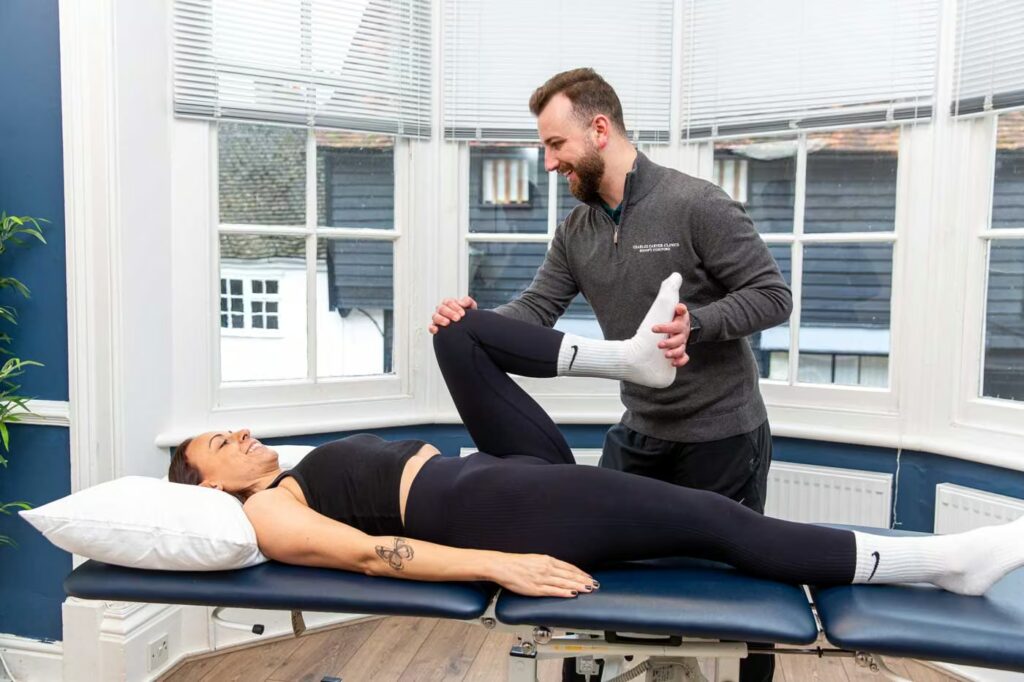
- Manual Therapy – Hands-on techniques such as joint mobilisations, soft tissue massage, and stretching to reduce pain and improve mobility.
- Strengthening Exercises – Targeted exercises for the muscles around the knee (especially the quadriceps, hamstrings, and glutes) to support the joint and relieve pressure.
- Balance and Stability Training – Exercises to improve control, coordination, and reduce the risk of future injury.
- Mobility and Flexibility Work – Stretching exercises to improve movement and reduce stiffness in the joint and surrounding muscles.
- Gait and Movement Analysis – Assessment of walking or running patterns to correct imbalances and improve mechanics.
- Education and Activity Modification – Advice on pacing, posture, footwear, and ways to modify daily activities to protect the knee while it heals.
- Return-to-Activity Planning – A gradual and safe return to sport, work, or exercise based on your individual goals and recovery progress.
By addressing both the symptoms and underlying causes, physiotherapy helps reduce knee pain, improve function, and prevent recurrence — keeping you active and moving with confidence.